
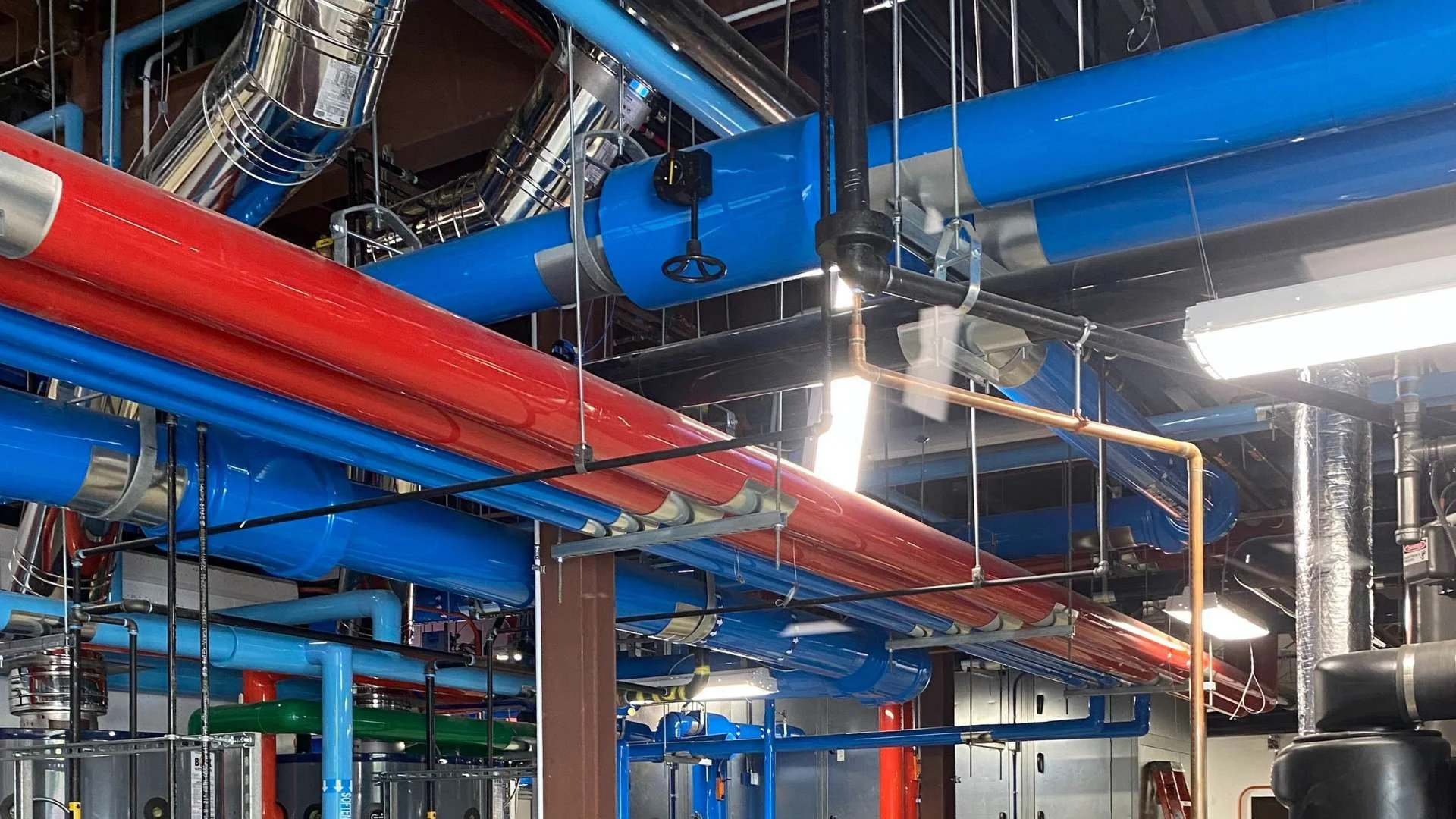
Mechanical insulation plays a critical role in the performance and reliability of facility systems. Over time, however, insulation systems naturally degrade. Aging materials, moisture intrusion, and physical damage gradually reduce insulation effectiveness, allowing heat transfer to increase and mechanical systems to work harder than intended. Re-insulating aging systems can restore efficiency, protect equipment, and help facilities regain control over energy performance.
For many facilities, insulation is installed during original construction and receives little attention afterward. While mechanical equipment may undergo routine maintenance, insulation systems often remain in place for decades. As insulation materials age, they can compress, absorb moisture, or suffer damage from service work and environmental exposure. Even small areas of compromised insulation can lead to significant energy loss and system inefficiency over time.
One of the most common causes of insulation performance decline is moisture intrusion. When insulation absorbs moisture, its thermal resistance drops dramatically. Wet insulation no longer performs as designed, allowing heat gain or loss to occur more rapidly. In chilled water systems, this can also lead to condensation problems, corrosion under insulation, and potential damage to surrounding building materials.
Physical damage is another frequent issue in mechanical rooms and industrial environments. Insulation jackets may be cut during equipment maintenance, removed temporarily for repairs, or damaged by foot traffic and nearby operations. Once protective barriers are compromised, insulation materials are exposed to air, moisture, and mechanical wear. Over time, these small damages compound and reduce overall system performance.
Older insulation materials may also no longer meet modern performance expectations. Advances in insulation technology have improved vapor barriers, durability, and thermal resistance. Re-insulating critical systems with updated materials can improve temperature control, reduce energy loss, and extend the life of mechanical equipment.
When insulation performance declines, mechanical systems must compensate. Boilers may cycle more frequently to maintain temperature, chilled water systems may struggle to maintain stable conditions, and pumps may operate longer than necessary. This increased workload places additional strain on equipment, raising maintenance costs and reducing system lifespan.
Re-insulation projects allow facilities to correct these inefficiencies before they become larger operational problems. By evaluating insulation condition and identifying areas where performance has declined, facilities can target upgrades where they will provide the greatest benefit. Strategic re-insulation can restore system balance, stabilize temperatures, and reduce unnecessary energy consumption.
Mechanical rooms, piping networks, steam systems, and chilled water lines are often the highest priority areas for re-insulation. These systems operate continuously and are responsible for transporting large amounts of thermal energy throughout a facility. When insulation performance drops, the resulting heat transfer losses can have a direct impact on building efficiency.
Re-insulating critical piping and equipment also helps maintain safe operating conditions. Insulation helps control surface temperatures, reducing burn hazards and improving working conditions for maintenance personnel. In chilled systems, proper insulation prevents condensation that can lead to slippery surfaces or moisture damage.
Another advantage of re-insulation is improved system stability. Consistent thermal control helps mechanical systems operate within their intended design parameters. This stability supports better energy management, improved equipment performance, and more predictable facility operation.
Facility managers often assume that insulation replacement requires major disruption, but many re-insulation projects can be completed in phases. Targeted upgrades allow facilities to address the most critical areas first while maintaining ongoing operations. Over time, this approach helps bring entire mechanical systems back to optimal performance.
Evaluating insulation performance should be part of a comprehensive facility maintenance strategy. Periodic inspections can identify damaged or degraded insulation before efficiency losses become significant. Addressing these issues early helps facilities maintain energy performance while avoiding larger repairs later.
QCI Thermal Systems works with facilities to assess insulation conditions and determine when re-insulation upgrades make operational sense. By restoring insulation performance where it matters most, facilities can improve efficiency, protect mechanical systems, and maintain stable operating environments for the long term.